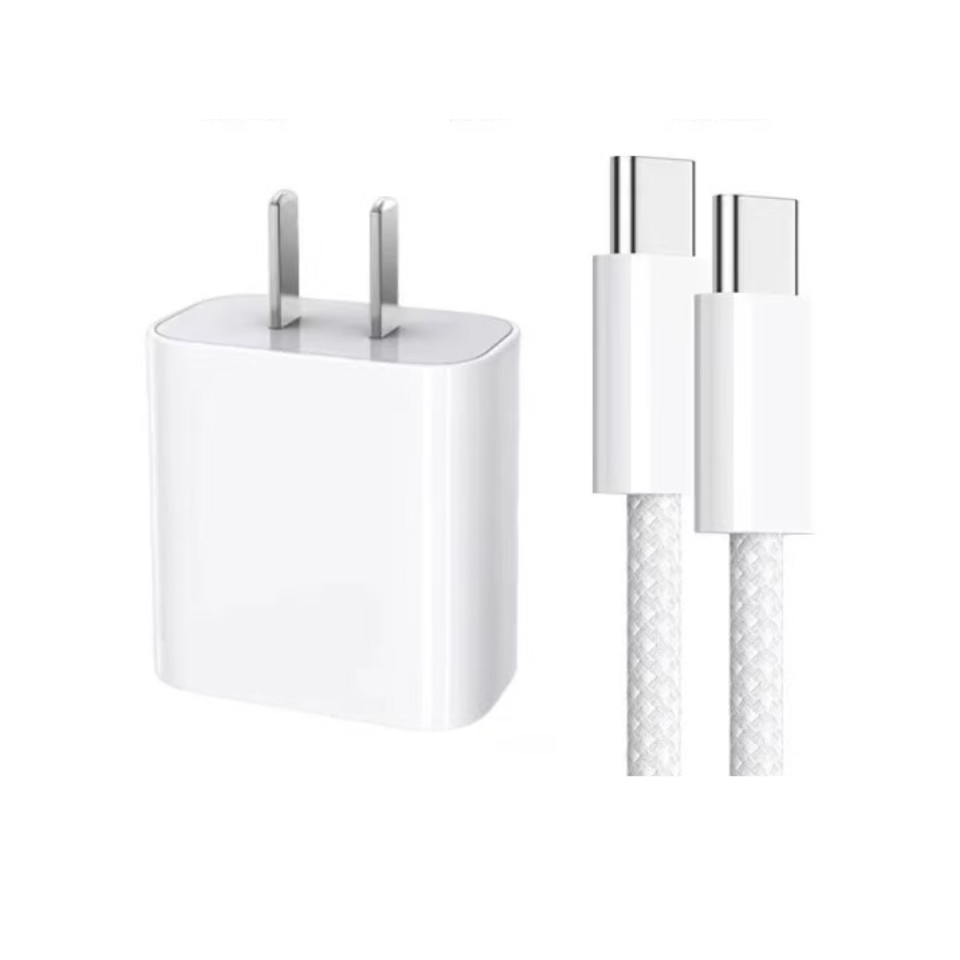
The power end is offered with either a USB-C or a USB-A plug, so one cable specification covers PD wall chargers, car chargers, power banks and the USB-A ports still built into docking stations and meeting-room furniture. It carries data as well as power, which means a Lightning device can be synced, backed up or restored on a service bench without a second cable being pulled from stock. We build it as a bulk, brandable item. Buyers order it for resale assortments, staff device programs and branded gift runs, and repeat orders are made to the same specification.
Design and Structural Engineering
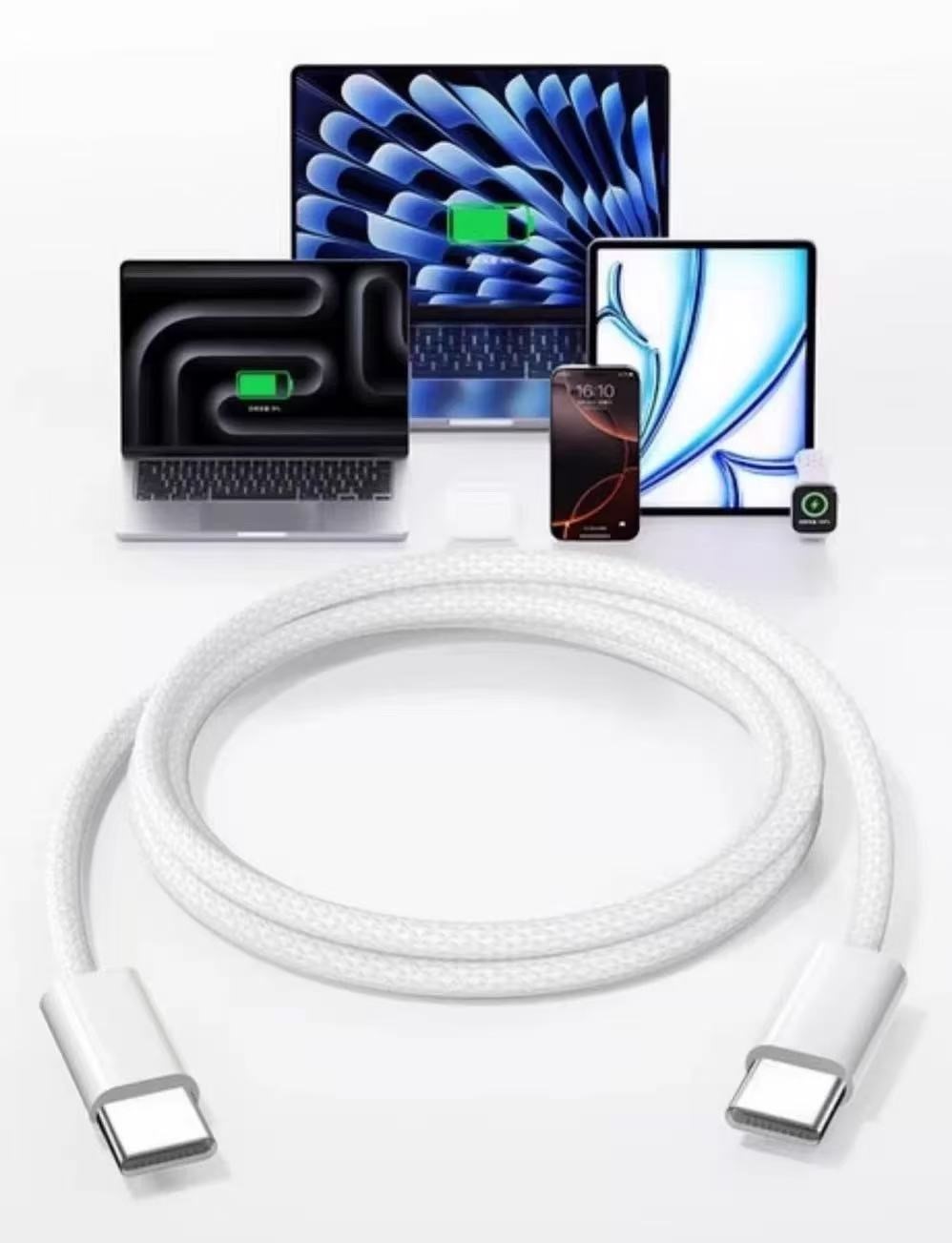
A charging cable usually fails where the cable meets the plug, so that is where most of the engineering sits. Both ends are molded with a reinforced joint that spreads bending stress along a longer section of jacket instead of concentrating it at the edge of the connector shell. The Lightning tip is held in an aluminum housing machined to a tight tolerance. That keeps the contact surfaces aligned with the port through repeated insert and removal cycles, which is what preserves a firm, consistent connection months into daily use rather than a plug that starts to wobble. Over the conductors sits a nylon braid woven tightly enough to resist kinking and abrasion, yet loose enough that the cable still coils without memory. The braid also stops the sheath from splitting when the cable is pulled out of a bag by the plug. Because the power end can be specified as USB-C or USB-A, the same cable body can be built for whichever charger standard your market uses, and the joint design does not change between the two. If you are matching a specific brand color or jacket finish, confirm it against a physical sample before the production run is released. The cable and charger maintain stable current flow and rapid data transmission for professional workflows, and compatibility with fast charging protocols helps reduce device downtime across managed IT systems and consumer devices. - 45W PD-rated charging: the cable is built for Power Delivery and rated up to 45W, so a compatible iPhone or iPad draws the highest charge its adapter can supply instead of trickling along. - Aluminum connector housings: metal shells hold the Lightning tip square in the port and take the wear that normally splits a molded plastic plug. - Nylon braided sheath: the braid resists abrasion and tangling in a bag or on a desk while staying flexible enough to coil flat. - Slim, case-friendly plug: the housing is sized to reach the port through most protective cases, so users do not have to peel a case off to charge. - Branding built into the product: the cable is produced to your order rather than pulled from a generic bin, so it reads as a branded item rather than a commodity cord.
Charging and Data Performance
Copper conductor, controlled heat: a copper core keeps resistance low, so less of the energy is lost as heat inside the cable during a long charge session. - Steady current on a busy desk: charging holds while the phone is in use for calls, maps or video, which is the point where a thin cable usually shows its limits. - Data as well as power: the cable handles data transmission for syncing, backup and restore work, so a service bench or IT desk needs only one cable type on hand.
Device Fit and Compatibility
This Apple Lightning cable is made for Apple devices that use the Lightning port, iPhone and iPad models alike. The Lightning plug seats fully, and the housing is slim enough to reach through the port opening on most protective cases, including folio and rugged shells, so users charge without removing the case.
At the other end, the choice is yours. A USB-C power end connects to a PD wall charger, a laptop dock, a car charger or a power bank with a USB-C output. A USB-A power end covers older wall chargers, multi-port hubs and the USB-A sockets built into desks and meeting-room furniture. Both versions carry the same Lightning output.
Two things are worth checking before a large order: whether any of your users carry cases with unusually deep port cut-outs, and what wattage your chargers actually deliver, since the cable can only pass on what the adapter supplies.
For USB-C phones, tablets and laptops, a Type-C cable is the correct match. This one will not fit those ports, so keep the two item types separate in a mixed-device order.
Professional Applications
IT departments: one Lightning cable specification for laptop bags, desk drawers and loaner kits means fewer part numbers to track and a support answer that does not change between floors.
Electronics distributors: a published spec sheet and stable repeat production let the item sit in a resale catalogue without constant re-qualification.
System integrators and AV teams: iPads used as room controllers, check-in terminals or signage players need a cable that stays seated behind a panel for years, not a consumer cord that loosens.
Device maintenance and repair benches: data transmission matters here, because backup and restore work runs over the same cable used for charging.
Hospitality and front-desk teams: loaner cables go out and come back daily, and an aluminum-and-braid build survives that cycle better than a molded plastic cord.
Working with one Lightning cable manufacturer across repeat orders keeps the specification fixed, so a shipment that arrives next quarter matches the one your teams were trained on.
The morning desk set-up: a phone arrives at twenty percent and goes straight onto a PD charger while calls, mail and a video meeting run back to back; the cable stays put and the phone leaves the desk charged. - The meeting room console: an iPad mounted as the room controller or booking panel sits on a shelf behind the table, wired permanently and expected to work for years without being touched. - The field technician's van: a power bank in the door pocket and a cable in the glovebox, used between site visits in whatever weather the day brings. - The hotel front desk: a guest asks for a charger late at night, a loaner cable goes out, comes back the next morning and goes out again the following week. - The trade-show booth: demo iPhones and iPads stay on charge all day while visitors handle them, so the connector has to survive constant plugging and unplugging. - The repair bench: a device comes in dead, gets charged, backed up and restored before it goes back to its owner, with power and data over the same cable.
Industry Integration and Commercial Deployment
Distribution and resale: a cable with published specifications and stable production is easy to list, quote and reorder across a resale catalogue.
Accessory programs for resale channels: aluminum housings and a braided sheath give the product enough shelf presence to sit beside branded chargers rather than in a value bin.
Device maintenance and refurbishment: shops that return repaired phones with a working cable can standardize on one cable and know the connector will not damage a fresh port.
Hospitality and guest services: front-desk loaner cables and in-room charging points need a durable build and a clean, neutral appearance.
Rental, loaner and event fleets: units that travel in cases and come back tangled survive better with a braided jacket and reinforced joints.
Education and shared-device programs: shared iPads and classroom carts go through heavy plug cycles, where a reinforced joint and metal housing outlast molded plastic.
For all of these channels, a Lightning cable manufacturer that holds one specification makes the item easy to plan, stock and repeat year after year.
Enterprise Deployment and IT Support
Start with an inventory: count the Lightning-port devices still in service across desks, meeting rooms, loaner pools and field kits, then note which charger types are already deployed. 2. Standardize the cable: pick one power-end configuration, one length and one jacket color for each use case so spares fit anywhere in the estate. 3. 4. Hold a spares pool: keep a small reserve for replacement and for new starters, so a failed cable never becomes a support ticket with a wait attached. 5. Issue and label: hand cables out with onboarding kits or at the desk, tagged with the asset reference your team already uses for IT consumables. 6. Review annually: track how many units are replaced per site and adjust the next order to the real failure rate rather than a flat allowance.
Product Information
Property
Value
Interface Type
Lightning, USB-C
Output Port Type
USB-C
Power End Interface Type
USB-C, USB-A
Rated Charging Power
45W
Fast Charging Protocol Compatibility
PD
Wire Core Conductor Material
Copper
Connector Housing
Aluminum
Outer Sheath
Nylon braid, tangle-free
Additional Function
Data Transmission
Compatible Devices
iPhone and iPad with a Lightning port
Protective Case Fit
Most protective phone cases
Certification
CE, FCC, RoHS
Customization
Length, jacket color, logo printing, packaging
Promotional Campaigns and Branding
A braided cable with metal connectors reads as a considered gift rather than a filler item, which is why it works well in campaign programs. The jacket can be produced in a color that matches a brand palette, the logo is printed on the cable or the connector housing depending on the artwork, and lengths can be set to suit the kit the cable goes into.
Typical programs include trade-show giveaways where attendees expect something they will actually use, employee onboarding kits that pair the cable with a notebook or a phone stand, client and distributor gifts at year-end, and internal recognition packs. Because the item is genuinely used every day, brand exposure lasts far longer than it does on a printed item that ends up in a drawer.
Packaging follows the campaign: a plain bulk bag for high-volume handout, a printed sleeve, or a presentation-style box for a more formal gift. Artwork is checked before production so the printed mark lands correctly on the braid and the housing.
If you are sourcing a custom Lightning cable for corporate gifts, the usual brief is a logo file, a color reference and a packaging format, and the sales team can work from that directly.
Ordering and Customization
Confirm the device mix and quantity, with the power end you need: USB-C for PD chargers and docks, USB-A for older chargers and hub ports.
Choose the cable length, jacket color and logo placement, and ask your sales contact to confirm the standard length options available for this build.
Send the logo or brand artwork in the format your sales contact requests, together with any color reference for the jacket.
Approve a pre-production sample and check the print position, jacket shade and plug fit against the device and case you actually use.
Confirm the packaging format, whether bulk bag, printed sleeve or individual carton, and the labeling your channel requires.
Agree quantities, schedule and delivery terms with your sales contact, who will confirm the current minimum order for your configuration, the production timing and the shipping arrangement.
Scale & Supply Capability
We are an integrated manufacturer and trading company established in 2005, with more than two decades supplying wholesalers, brand owners and distributors across North America and Europe. Our broad range of promotional and corporate gift products lets buyers consolidate different requirements with one supplier. OEM and ODM support is available for custom branding and product development, and our team coordinates production and export from first inquiry through delivery.

FAQ
Which devices can use this Apple Lightning cable?
Any iPhone or iPad with a Lightning port. The power end is USB-C or USB-A depending on the version you order, so the charger, dock, car adapter or power bank you already own can stay in service. It will not fit USB-C devices such as newer iPads, Android phones or laptops, which need a Type-C cable instead.
Will the connector fit through a phone case?
The aluminum housing is slim and reaches the port on most protective cases, including folio and rugged shells. Cases with very deep port tunnels, or a thick wallet flap over the charging opening, can block any cable, so check the opening on the case your users actually carry before a large order.
Does it charge at 45W on any charger?
The cable is rated to 45W and is wired for Power Delivery, but the rate is negotiated between charger and device. Pair it with a PD adapter that supports the wattage your iPhone or iPad accepts and it passes that full rate through. On a standard 5V adapter it charges at the adapter's rate.
What is the cable made of?
A copper wire core carries the current, aluminum housings protect both connectors, and a nylon braid covers the jacket to resist tangling and abrasion. The braid stays flexible, so the cable coils flat in a bag rather than holding a shape.
Can the length, color and logo be customized?
Yes. Jacket color, cable length and logo printing are set per order, and packaging can be produced to your design. That is what most buyers use when they order a custom Lightning cable for corporate gifts or a staff kit: the cable carries the brand while staying an accessory people keep using.
Does it transfer data as well as charge?
Both. The cable carries data transmission alongside charging, so it can sync, back up and restore Lightning devices. That is what makes it usable on a repair bench or an IT desk, where one cable has to do both jobs.
What certifications does it carry?
CE, FCC and RoHS, and the documentation can be supplied with your order for tender or vendor approval files. As a Lightning cable manufacturer we keep the same specification and compliance set across repeat production runs.
Order & Customization MOQ: Flexible Logo: Custom printing available Packaging: Custom design supported Sample: Available upon request